Repair TipsLocal Guides
Why is my circuit breaker tripping and won't reset
A breaker that trips and won't reset is telling you something specific. Here's what causes it in Citrus Heights homes and what to do next.
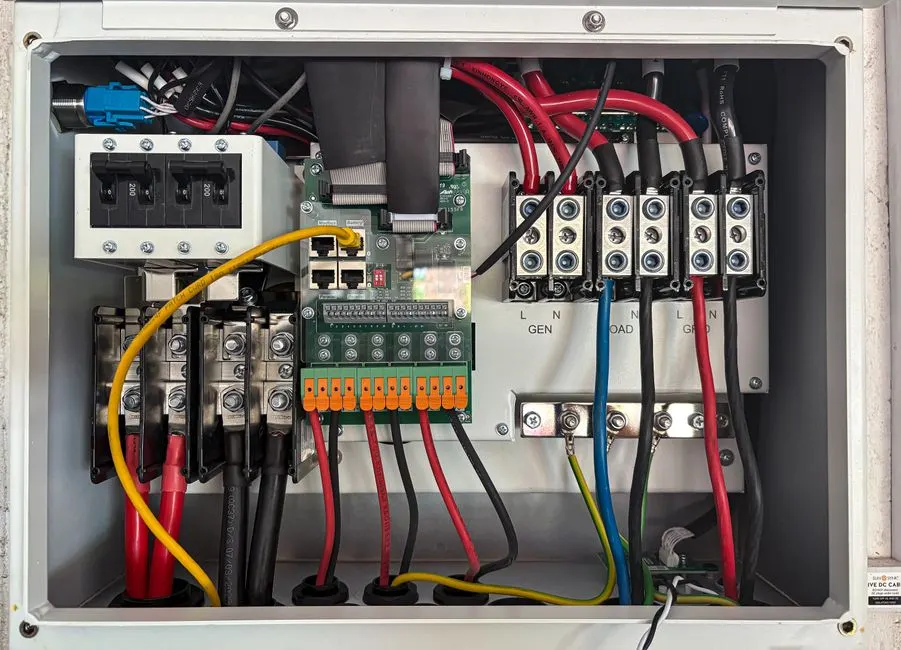
A circuit breaker that trips and won't reset is doing its job - it's cutting power because it detects a fault, an overload, or a breaker that has failed internally. If the handle won't stay in the ON position, or it snaps back the instant you flip it, the problem is almost never the breaker alone. Something on that circuit is pulling too much current, shorting out, or the breaker itself has reached the end of its service life. In Citrus Heights, where a large share of the housing stock was built between 1965 and 1985, we see this call several times a week - and the cause is usually one of six things we'll walk through below.
The short answer: why a breaker trips and won't reset
A breaker that won't reset is either sensing a live fault on the circuit or has mechanically failed. If it trips instantly on reset with nothing plugged in, the wiring or the breaker is the problem. If it holds for a few minutes and then trips, you're overloading the circuit. If the handle feels loose, won't click, or the breaker is warm to the touch, the breaker itself is done.
Why is my circuit breaker tripping and won't reset Citrus Heights CA homeowners ask us this constantly, and the honest answer is: the breaker is a symptom, not the disease. Replacing it without finding the fault just moves the problem down the line.
How a circuit breaker actually works
A circuit breaker is a safety switch that opens the circuit when current exceeds its rating or when it detects a ground fault. Inside every breaker are two trip mechanisms: a thermal element (a bimetallic strip that bends as it heats up) and a magnetic element (a solenoid that snaps open on a sudden surge). A 15-amp breaker on a bedroom circuit is designed to carry 15 amps continuously and trip somewhere around 15 to 20 amps depending on how long the overload lasts.
When a breaker trips, one of three things happened:
- Overload - too many loads on one circuit. Space heaters, hair dryers, and microwaves are the usual suspects.
- Short circuit - a hot wire touches a neutral or ground wire. This trips instantly and often leaves a scorch mark.
- Ground fault - current leaks to ground, often through water or damaged insulation.
Each of those has a different fix. That's why we don't just swap breakers and leave - we test the circuit first.
The most common reasons a breaker won't stay on in Citrus Heights
After thousands of service calls across Citrus Heights and the surrounding neighborhoods, these are the causes we find most often, roughly in order of frequency.
1. The circuit is genuinely overloaded
A 15-amp circuit can handle about 1,800 watts. A single 1,500-watt space heater plus a TV and a lamp will push a bedroom circuit past its limit. In Citrus Heights, this is especially common in older homes where one circuit feeds two or three bedrooms plus a hallway. The fix isn't a bigger breaker - it's redistributing the load or adding a dedicated circuit.
2. A failing appliance or device
If the breaker trips only when a specific appliance runs, that appliance is the problem. A refrigerator with a failing compressor, a microwave with a bad transformer, or a window AC unit with a shorted motor will all trip a healthy breaker. Unplug everything on the circuit and try the reset. If it holds, plug devices back in one at a time until it trips again.
3. A loose or damaged wire connection
Heat cycling loosens connections over time. A backstabbed outlet (where the wire is pushed into the back of the receptacle instead of screwed to the terminal) is a common failure point in homes built before 1990. When that connection arcs, the breaker trips - and it will keep tripping until the connection is repaired.
4. A worn-out breaker
Breakers are mechanical devices with a service life of roughly 30 to 40 years. A breaker that has tripped dozens of times, or that sits in a hot garage panel, will eventually fail in the tripped position. You can usually tell by feel: a healthy breaker snaps firmly; a worn one feels mushy or won't latch at all.
5. Moisture or pest intrusion
Citrus Heights gets its share of winter rain, and water finding its way into an exterior outlet or a subpanel is a real cause of repeated tripping. Rodents chewing wire insulation in the attic or crawlspace is the other one. Both create ground faults that trip a breaker the moment you reset it.
6. A failing GFCI or AFCI breaker
GFCI and AFCI breakers have sensitive electronics that fail more often than standard breakers. If your tripping breaker has a TEST button on it, it's one of these. They nuisance-trip when they age, and they also trip legitimately when there's a real ground fault downstream.
Circuit breaker trips immediately after reset Citrus Heights CA
If the breaker trips the instant you flip it - before you've even turned anything on - you have a hard fault. That means a short circuit or a ground fault is present on the wiring itself, not from a plugged-in device. This is the scenario where you stop resetting and call us.
Here's what we do on that call. We isolate the circuit, disconnect the load, and meg-ohm test the wiring to find where the fault is. Nine times out of ten it's a damaged receptacle, a nail through a wire from a recent picture-hanging project, or a failed splice in a junction box. Once we find it, we repair the connection, test the circuit, and reset the breaker. If the wiring itself is compromised, we'll talk about options - sometimes a single repair is enough, and sometimes the circuit needs a Whole House Rewiring Citrus Heights CA evaluation.
Breaker won't reset after power outage Citrus Heights CA
A breaker that won't reset after a power outage is usually a different animal. When power comes back on, everything on that circuit tries to start at once - the fridge, the AC, the furnace blower - and the inrush current trips the breaker. That's normal and it usually resets fine on the second or third try.
If it won't reset at all after an outage, you may have a breaker that was already weak and the surge finished it off. Or you have a genuine fault that the outage exposed. Either way, don't keep flipping it. A breaker that won't latch is a breaker that needs to be replaced, and we handle that with a proper Circuit Breaker Replacement Citrus Heights CA - same-day in most cases.
Common mistakes homeowners make with a tripping breaker
We see the same four mistakes over and over. Any one of them can turn a $200 repair into a $2,000 one.
- Installing a bigger breaker. Putting a 30-amp breaker on a 14-gauge wire circuit is how house fires start. The wire is rated for 15 amps. The breaker is supposed to protect the wire, not the appliance.
- Holding the handle in the ON position. Forcing a breaker to stay on defeats the entire safety mechanism. If it's tripping, it's tripping for a reason.
- Ignoring the burning smell. A faint plastic or fishy smell near the panel means insulation is overheating. That's an emergency, not a wait-and-see.
- Resetting repeatedly without investigating. Every reset puts stress on the breaker and the wiring. After two resets that don't hold, stop.
We also get calls from homeowners who've tried to troubleshoot a tripping breaker themselves and ended up with a bigger problem. If you're not comfortable working inside a live panel, don't. The main lugs are still energized even with the main breaker off. That's a job for an Emergency Electrician Services Citrus Heights CA call, and we'd rather you make it than get hurt.
When to call a professional
Call a licensed electrician when the breaker trips immediately on reset, when you smell burning, when the panel is warm, when you see scorch marks, or when the same breaker has tripped three or more times in a month. Those are the clear signals.
We handle tripping breaker diagnostics across Citrus Heights every day. Our technicians carry the meters and test equipment to find the fault on the first visit - we don't guess and we don't sell you a panel you don't need. If it's a simple fix, we fix it. If the panel is the problem, we'll show you what we found and give you a straight price before we start. You can see the full range of what we do on our Electrician Citrus Heights CA page.
One more thing: if your panel is a Federal Pacific Stab-Lok, a Zinsco, or a Pushmatic, and it's tripping, that's a known failure pattern. Those panels have a documented history of not tripping when they should. We replace them regularly. A Electrical Panel Replacement Citrus Heights CA is the right call when the panel itself is the hazard.
How much does it cost to fix a tripping breaker in Citrus Heights CA
Typical 2026 pricing in the Citrus Heights area breaks down like this:
- Diagnostic visit: $89 to $150, often waived if you approve the repair.
- Breaker replacement (single): $185 to $350 installed, depending on breaker type.
- GFCI or AFCI breaker replacement: $220 to $400.
- Outlet or connection repair: $150 to $300.
- New dedicated circuit: $450 to $900 depending on run length and attic or crawlspace access.
- Full panel replacement: $1,800 to $3,500 for a 200-amp upgrade, permits included.
Those numbers move based on panel brand, wire condition, and how accessible the run is. We give you the price before we start, and it doesn't change unless we find something you didn't know about - and then we stop and talk to you first.
Frequently Asked Questions
Why won't my circuit breaker reset in Citrus Heights CA?
It won't reset because a fault is still present on the circuit or the breaker has failed internally. Push the handle fully to OFF first, then back to ON. If it snaps back immediately, stop and call an electrician - that's a short or ground fault.
Is a tripping breaker dangerous in Citrus Heights California?
A breaker that trips once and resets cleanly is not dangerous - that's the safety system working. A breaker that trips repeatedly, feels hot, or smells like burning is dangerous. Those three signs mean stop using the circuit and call us the same day.
Should I replace a breaker that keeps tripping in Citrus Heights CA?
Only after the circuit has been tested. If the breaker is worn and the wiring is clean, replacement is the fix. If the wiring has a fault, replacing the breaker just hides the problem. We test first, then replace only what's actually failed.
How much does it cost to fix a tripping breaker in Citrus Heights CA?
Most tripping breaker repairs in Citrus Heights run $150 to $400 in 2026. A simple breaker swap is on the low end; a faulted circuit repair or a GFCI replacement is on the high end. Full panel replacement runs $1,800 to $3,500.
Can I just leave the breaker off and use the rest of the house?
Yes, short-term. Leaving a faulted circuit off is safer than resetting it repeatedly. But the underlying issue doesn't fix itself, and if the fault is in shared wiring it can affect other circuits. Get it looked at within a week or two.
Get help with Electrician in Citrus Heights
If your breaker won't stay on, we'll find out why and fix it right. We serve homeowners across Citrus Heights - from Electrician in Downtown Citrus Heights to the Mesa Verde Electrician service area - with same-day appointments and upfront pricing.
Call Gray Electrical Pros at (866) 273-0386 and we'll get a technician out to diagnose the circuit and get your power back on safely.